
Warm-up science & CARS
Build purposeful warm-ups and use controlled articular rotations to understand joint function.
Interactive curriculum
Move from screening and programme design to applied biomechanics, energy systems, advanced methods and commercial readiness.
What students learn
The EPTA syllabus teaches students how to assess, explain, programme and adapt—not just how to recognise exercise names.
Each phase connects online theory with practical work in the studio. Students use real coaching frameworks, screening stations, case studies and programming systems throughout the 10 weeks.
Week by week
Open each phase to see the practical focus for every week.
Build purposeful warm-ups and use controlled articular rotations to understand joint function.
Read posture, squat, shoulder, hinge, balance, core and cardiovascular movement findings.
Classify the client, set the goal and make decisions on frequency, load, volume, rest and tempo.
Demonstrate, explain, coach and affirm so sessions build competence and client confidence.
Coach pressing mechanics through grip, gut and glutes, then apply the same precision across upper-body patterns.
Develop adaptable coaching through rotating kettlebell, calisthenics and pad-work practice.
Set up a responsible service, communicate your value and present a clear offer confidently.
Coach more than 30 lower-body variations across push, pull, unilateral strength and regressions.
Use the Gain, Pain and Sustain framework to match conditioning to the required outcome.
Apply systems including GVT, 5×5 and 6-12-25 with sound progression and coaching judgment.
From information to ability
The Academy uses repeatable frameworks so students can make clear decisions under real coaching conditions.
Show the movement, give concise cues, guide it in real time and reinforce what the client does well.
Use a simple pressing checklist to organise hand position, trunk control and lower-body tension.
Connect client classification and goals to session structure, exercise selection, load, volume, rest and tempo.
Free syllabus preview
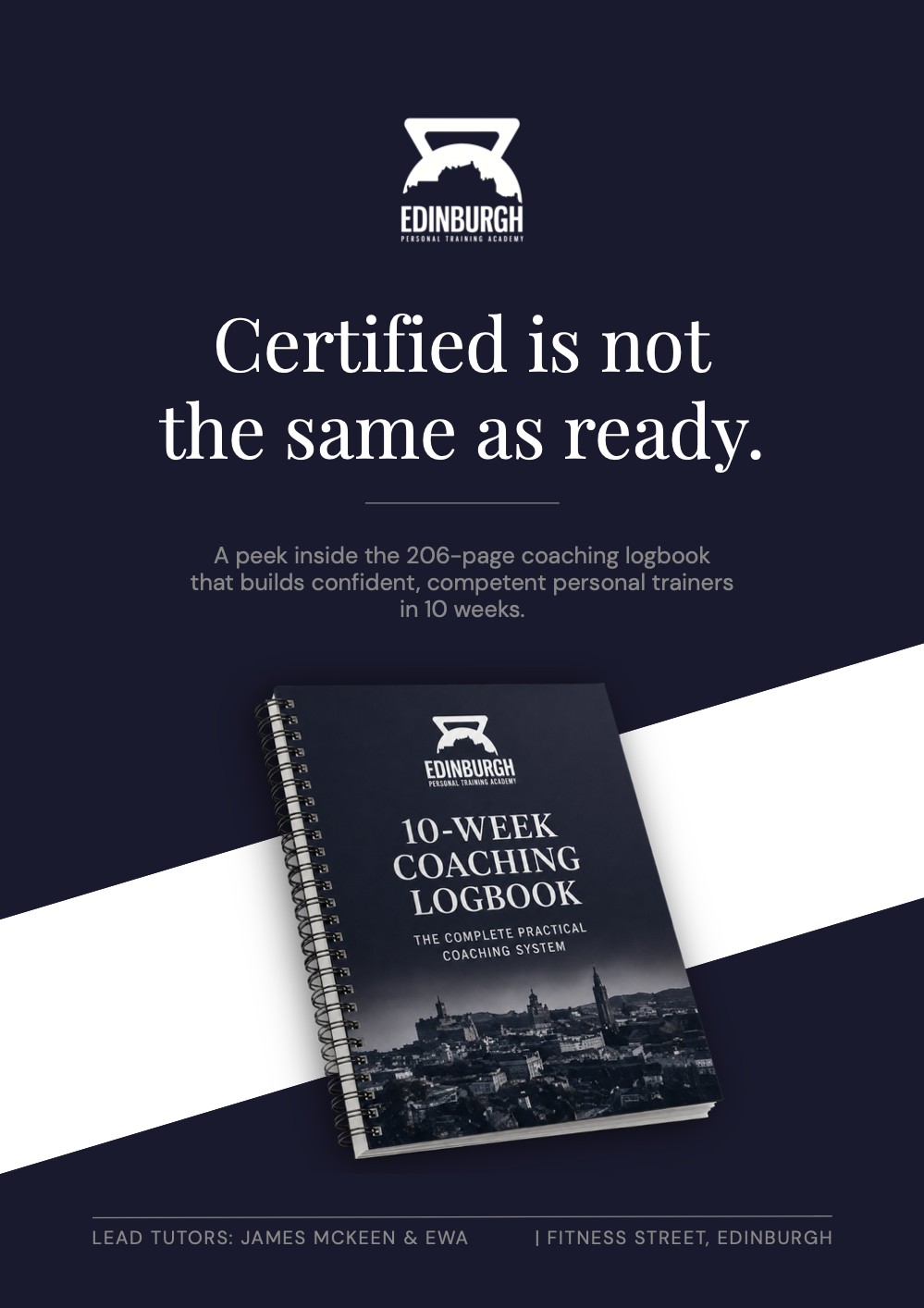
The five-page preview shows the frameworks, a client case study, movement screens and the complete course roadmap.